


Having worked at a number of startups over the past decade, there are fewer abbreviations that I have heard as much as the “MVP”. This includes all of its cousins too — MLP, MDP, MMP, etc.
Whilst designing the MVP for each feature or user flow has its merits it can also box us into a close-minded view of what our product could be. Sure, we do not have time to build all the parts, but having an idea of what those parts could be can help frame our thinking in new ways and get the team bought into a longer-term strategy of how we get there.
Working backwards from this exploratory venture, we can cherry-pick the parts that make sense to build right now. The benefit here is that we now have a broader view of how future parts may connect with this smaller part that we are focused on.
So, what is wrong with MVPs?
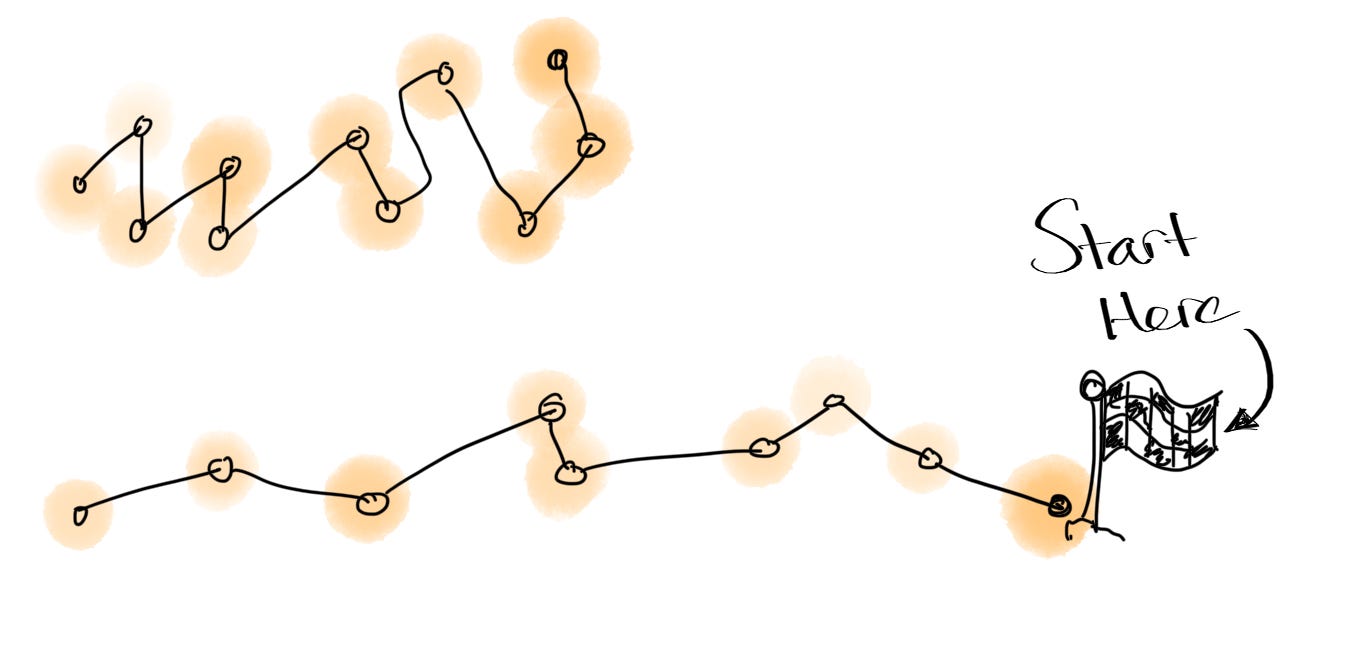
The typical approach to product design can often get us stuck in the "MVP loop." We focus so much on getting the minimal viable product out the door that we forget to think about what comes next. What is the bigger picture if this release is successful?
Too many products are made up of many scrappy MVPs, and it shows. Things can feel disconnected and inconsistent. Because there is no broader vision and a lack of thought being given to how the parts connect the product can often evolve spawning scrappy MVPs on top of scrappy MVPs. What you end up with is a product that is devoid of any sort of vision or craft.
That’s not to say that products cannot succeed by following an MVP-led approach, but at some point it has to be a conscious decision that the team makes as it could well lead the company down the path of being a feature-full but scrappy product.
Having recently migrated from Obsidian to Bear for my note-taking and writing, you can quickly get the sense that one product, while feature rich, can be a little overwhelming and complicated to use whereas the latter “just works”.
Bear has truly taken steps to ensure that every piece of the product works seamlessly with the other parts towards a cohesive vision — it is evident across platforms too. Obsidian on the other hand is very very powerful, with lots of things that kind-of work across platforms — it feels like you are using a product with a lot of MVPs.
Where would you like to go?
Imagine stepping into a taxi and answering that question above with:
“Just round the corner is fine, and then we’ll see where to go next.”
Your driver would likely kick you out pretty soon after, and you would have a very inefficient ride to a destination that you have yet to decide upon. Seems ridiculous right, but we do this a lot when building products.
So, next time you are working on a new feature or workflow — try to carve out some time to really stretch your mind farther into the future and see if you can craft a future state that can help provide direction to your team and yourself as you take those turns to get there.
Just like in the taxi analogy, you may find that some roads are blocked or that the traffic is too bad — justifying a change in direction. These are the MVP decisions, the small steps that you take along the way but at least you have some semblance of where you are heading towards.
Of course, there is a caveat
This is not some foolproof, magic bullet that will work for everything, all of the time. Reflecting on the axiom that you may have to solve the wrong problem first before you find the right one, there is a high chance that your extended vision of the product is not what is actually needed, at least not in its entirety. This is OK.
Considering the OODA loop where we can Observe, Orient, Decide, and Act we can continue to review and adjust against the vision that we had just as we would keep an eye on those turns and the traffic that lay ahead.
If, half way through your taxi ride, you realise that where you are heading to has permanently closed down, you will likely change your plans. Same is true when building product. At the first opportunity you recognise a need to adjust — adjust.
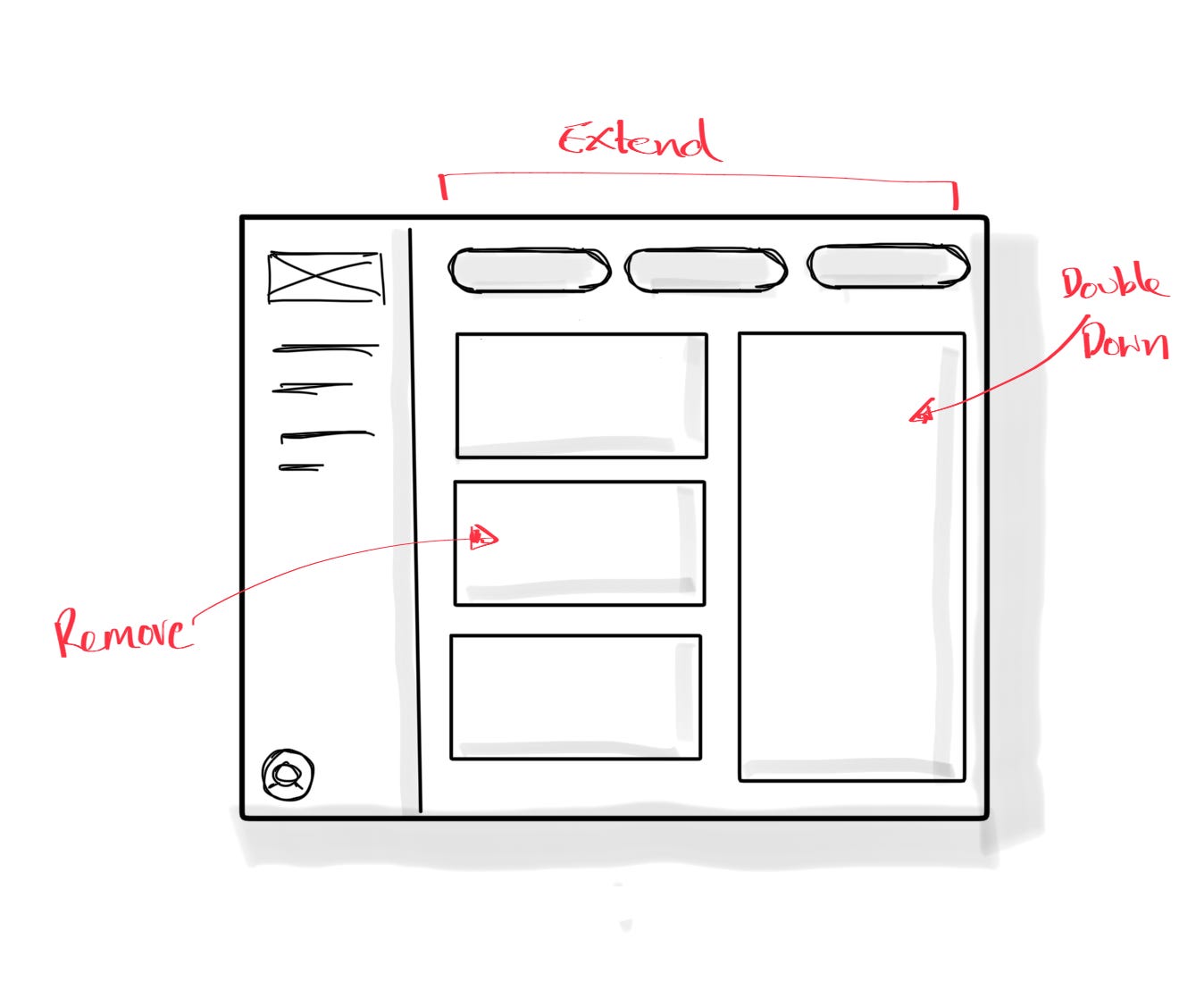
Wrapping up
While there is no perfect way to develop products, I find that rewiring my thinking to work backwards from an ideal future state has been extremely powerful in providing direction for today’s decisions. It helps team members connect the dots and see the bigger picture.
Being able to pull on this idea, has also helped to align the team and allows them to consciously and subconsciously move towards that direction, allowing their individual contributions to contribute to that future vision.
This can be far more powerful than having folks pull in different directions along the way, shipping solutions that are based on short-term thinking.
Try it out and let me know how you get on.
Powering this week's thoughts
Music plays such an important role when I am thinking, working, and reflecting. I also find it interesting to see what others are listening to. It's a gateway into an aspect of their personality. That's why I'd like to share, with each article, an artist or playlist that I have been listening to that week. Here's this week’s: