


It’s the week before I start my new role as Lead Designer at Stuart—and I must admit, I’m pretty excited. For those that know me, I love cycling, maps, and complex products. Stuart has all three. But landing a job that’s a great fit isn’t exactly easy.
As both an interviewer and interviewee, I thought it could be interesting to share my thoughts from both sides of the fence. I know I would have benefited from some of this hindsight, so I hope this article also brings some value to you and helps you to find your dream job.
This article refers to these Notion time-saving career templates and checklists.
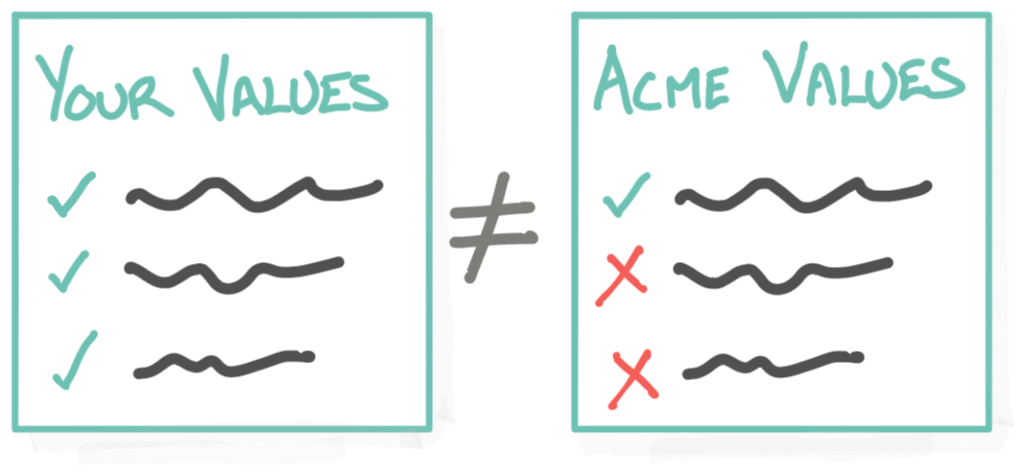
What do you value?
I know that my younger self would have had a very different answer than what I’d say now. Starting out, it can be easy to focus solely on money, specific companies, or job titles. And that’s OK. But as you evolve in your career, with each new shift, you should be asking yourself if you are doing something you truly value and that enriches your life.
Life’s simply too short to not acknowledge, and live by, the values that are most important to you at each stage of your life.
You see, there is no shortage of jobs out there. The biggest issue is finding one that is a great match for your skills, and more importantly, your values. This is an important distinction that I’d like to call out. Having interviewed hundreds of people throughout my career it’s, of course, obvious to state that skills are important. But what can often be overlooked—but have a significant impact—are someone's values.
There are no right or wrong values to adhere to either. Some companies and individuals value hard, intensive work. Others value family time and prefer work to be more flexible. What matters is that your values, and those of your employer, are a good match. Treat it like a relationship. You certainly spend enough hours at work for it to reach “relationship status”.
Being clear in what you want promotes focus and direction
Applying for jobs is exhausting—there’s no sugar coating that. One way to make it less so is by going through the exercise of value-setting and then finding the best matches. Be strict and focus on the top matches.
Being picky will ensure that you only apply for the few roles that matter most to you and are a good fit. Doing this allows you to pour more effort into each process versus spreading yourself thin across tens or hundreds of ill-suited positions.
As a hiring manager, I have seen an abundance of applications for which that person is clearly not a good fit. To the point where there are no relevant skills and no alignment with their values. The only thing this results in is a frustrated hiring manager and a bad reputation for that candidate. It shows that you really don’t care and will take any job—and that’s not someone that you want on your team.

Lean on your network
OK, so I’ve set the scene that there’s a lot of work ahead. A great place to start, especially during the early stages of job hunting, is to reach out to your network. When people ask “If you could give your younger self one piece of career advice, what would it be?”, my answer is always “network more”. Networking was something that I did not come to value until later in my career and has so far secured more than half of my roles to date.
Update your LinkedIn
In a lot of countries, LinkedIn has grown to be the standard for all things career-related. Maintaining an active profile and up to date information can increase the likelihood of you appearing on someone's radar. The obvious first step is to ensure that all of the information is up to date and correct.
As a hiring manager, LinkedIn helps to provide a standardised format of seeing someone’s experience and I actually prefer to refer to peoples profiles here versus wading through PDFs.
Often CVs are laid out in many different formats, with different information structures and styles. When reviewing tens or hundreds of CVs, it can be quite time-consuming trying to understand the structure and information in each. When checking LinkedIn, you can jump to specific areas easily and dig deeper if needed.
Looking to change your career direction? Review your personal summary and the description of your previous—and current—roles. Do the language and the focus of your descriptions speak to what you want to do more of in the future? If not, try rewording it to be more relevant.
Another tip here is to focus on your results, not your tasks. Rather than explaining what you did, try reframing your role descriptions to focus on the outcomes you achieved. As a recruiter, these are great signals that you are outcomes-focused.
Stand out by investing in the visual queues. It can also be useful to ensure your profile picture is up to date and that you have added any relevant links, graphics, or presentations to your career history. This richer content allows recruiters and hiring managers to go down the rabbit hole if their interest is piqued by a specific part of your experience.
Now is also a great time to check your recommendations section. What have people said about you in the past? How relevant are your recommendations to the types of roles you are currently looking for? If these need to be updated, why not reach out to some past colleagues and ask if they can recommend you? Let them know what types of roles you are looking for and ask if they can speak to the skills that may help in landing your preferred role.
Another plus here is when you reach out to former colleagues, you may find that they have since moved on. Maybe their current company is looking for someone just like you! Also, if they can refer you that’s a big plus—internal employee referrals are often highly valued when looking to grow teams.
Establish your brand through writing
Another great way I have found to open up new doors is through writing. I’ve tried to make a habit of this, but have never managed to be as consistent as I’d like. That being said, my role as CPO at Boatim was off the back of an article I’d written here on Medium. I’ve also had other recruiters and companies reach out to me for opportunities often referencing a previous article and how it resonated with them.
The values that I mentioned at the start will also help you to ground your writing into a specific format and narrative that over time will demonstrate how you think and work. If a hiring manager or recruiter comes across one of your pieces and connects with your approach, you may well find a couple more emails appearing in your inbox.

Writing is a skill. One which you can, and should, develop over time. Being able to formulate your thoughts and clearly convey them in a written format will help you in most types of work. It may not be perfect the first time around. But that’s OK. Through continued practice, it will get better.
Having an article written is also a great way to connect with colleagues, friends, or family who may be able to help get you noticed. By sharing your article and asking for feedback from some relevant people, you may well find them forwarding your work on to direct contacts in companies or offering to also share your article through their social media too.
Show AND tell
In addition to updating your LinkedIn and publishing your thoughts through something like Medium, now is also a great time to update your other online profiles. Again, depending on what you are looking for, you should focus your efforts on the ones that will likely bring the most return based on the types of roles you are looking for.
As a designer, this may mean adding some case studies or visuals to your Dribbble or Behance accounts. Looking to get into marketing? How are your social network profiles looking? Want to move more into code? What type of stories does your Github profile tell?
Having these platforms all telling a similar narrative, and visual style helps to build up a strong consistent personal brand. Over time this will make you stand out and be more memorable to those that stumble across your work.
Search smart 🕵️♀️
Ok, so you’ve reached out to your network, updated all your profiles and written some articles. Now what?
Rather than checking job sites each day and searching over and over for the same types of roles, I’d recommend that you instead set up alerts. Most platforms will allow you to do this, but the ones I used most were LinkedIn and Glassdoor. If you are in the creative field, sites like Dribbble and Behance also have job markets that you can check out.
When adding a search alert, you may want to set the following parameters:
Location (adding multiples if you are willing to relocate)
Stating if you are open to remote jobs or not
Your salary expectations
The types of roles that you would be happy with
The types of companies you would like to work for
In short, the more information you provide will make it more likely for you to find what’s most relevant. This way you only need to apply when something relevant pops up. Otherwise, you can use that time that you are not “searching” to connect with your network, write some content, or work on your online profiles.
Think of job alerts like a personal assistant who goes out into the world and brings you back only what’s relevant. It’s a real time-saver.

You wouldn’t eat in a 1-star restaurant
So, why should you work at a 1-star company? We are fortunate these days to have a myriad of information at our fingertips. Luckily this is now also the case when it comes to companies, and their employee and candidate reviews.
Not every company will have a profile on Glassdoor, but it’s definitely worth a check. How the company says they operate on their careers page may not align with reality. Being able to reference a site like Glassdoor allows you to find any red flags before getting too deep into the process, or worse, accepting a role at a bad company.
What’s more, a lot of the more commonly applied-for positions offer some insight into the interview process. If someone has been through the process, how did they find it? What steps were involved? In some cases, you can find out what types of questions are being asked. Familiarising yourself with the expectations will vastly reduce the stress that can often come with interviewing. Preparation is key.
When it comes to reading these reviews you may want to take them with a pinch of salt. A disgruntled employee who was fired for underperformance may not be offering an impartial review, so it’s best to look for patterns. This way you can see how many people mention things like “overworking”, “top-down management”, “lack of trust”, etc.
One thing to look out for is: how long that person has been working at the company, and also what department are they in? One bad department does not mean that the company as a whole is bad. Look for patterns relative to the types of roles that you are looking at.
Glassdoor can also offer some insights around salaries which may also help you in understanding if there is a good match here. Not budging on values, location, salaries, etc. will allow you to stay focused on the roles that are best matched to you.
If the company you are applying to doesn’t have a Glassdoor profile, don’t worry, you can also check in places like their blog, social media, Google Maps and App Store reviews. What do they say? What do their customers say? There’s likely information out there—but sometimes you may have to work harder to find it.
Now it’s time to apply ✍️
As you sit down with your morning coffee and open up your emails—ping—there’s a new job alert. You open it, do some checks on Glassdoor and find that it’s a good match. It’s time to apply.
Like a sharp suit or stunning dress, your application should be tailored to fit. If not, your application will land as well as you turning up at a friends wedding wearing a pair of baggy jeans. And there’s no faking it. Having waded through hundreds of CVs and applications you can easily separate the cookie cutters from the conscientious applications. If you don’t care to put in the time and effort for a role, it’s a little unfair to expect the hiring managers and company to put in the time and effort to interview you.
There’s an unwritten contract here that both you and the company should respect each other’s time throughout the process. Sending a well-considered application that highlights your relevance for the role at this company is your first signature on that contract.
Cover letters may be requested by some employers but I see less and less of these. At the very least you can often leave some sort of message or write directly in an email. In doing so, you can take that extra paragraph or two to highlight why you. A recruiter or hiring manager is asking this every time they open an email or check for new applications. The easier you can make it for them to answer that question, the better chance you have of making it to the next stage of the process.
Keep it short and to the point. Address the values that you have defined. And if you are struggling to outline the “why you” when submitting your application, it may not be the best fit. If you cannot write something to convince yourself that this is a good fit, you may struggle to convince the hiring manager.
Keeping track
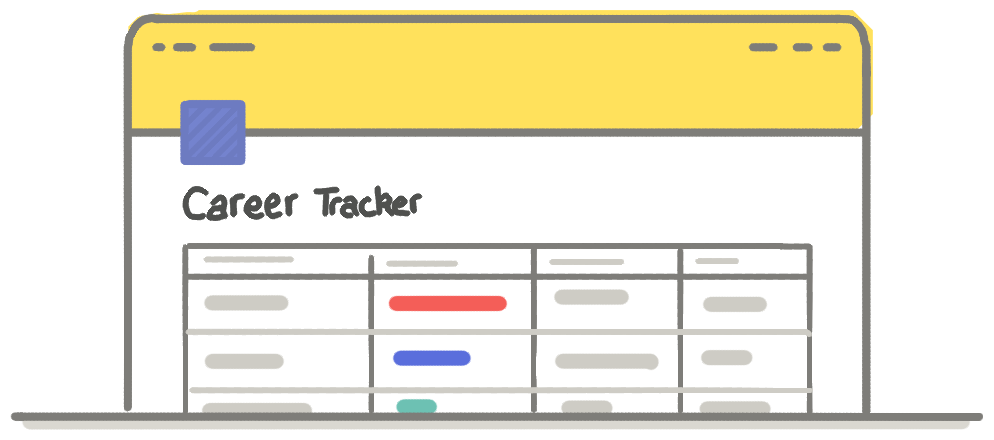
So, you’ve applied for some roles and have started to receive some responses. Relying solely on your inbox will soon become messy. When applying for, and speaking with companies, I began to log all of my applications and discussions in a Notion template.
Having a standardised structure allowed me to focus on having meaningful and consistent discussions which revolved around my values and how well they fitted the company. It was easy to keep track of who I’d spoken to, and when, and who I would be speaking to next.
This approach took out a lot of stress from the process and gave me a clear system to follow throughout each interview. Having one less thing to worry about while you interview is a huge plus.
Some features of this template are:
A link to the job description
The company website
The company’s LinkedIn profile
The company’s Glassdoor profile
Some easy-to-reference stats
Recent news articles
Notes about who I was speaking to and when—along with all of my notes from that discussion
Links to your own portfolio or the CV/cover letter that you sent
In going through a number of interviews, I was able to tweak and improve the process after each one. Below are some tips on each of the high-level stages and how these were documented using the template.

Leveraging tools
So, I’ve mentioned the template document that I created in Notion. In addition to this, I also used the tab groups feature in Brave (similar to the Chrome browser, but with better privacy).
This would allow me to group interviews together, where I would have the following for each:
My Notion doc for that role
The job description
The LinkedIn pages for who I was speaking with next
Any other relevant references
In doing this, it meant that I could easily collapse the group and not be overwhelmed by a sea of tabs, but when the time came for the next call, I would be able to pick up where I left off and not feel flustered in preparing for each interview.
The first call 📞
So, you’ve nailed the application and have an invite to some sort of screening call (or in-person interview). This will typically be with a recruiter or someone from HR. They will often tell you more about the role and try to understand your motivations and why you could be a good fit.
It’s important to not waste this time going over publicly available details that you’ve read on the job description—these calls are typically around 30–45 minutes, which is not long.
I suggest having an agenda of things that you’d like to discuss. You may even want to send this across ahead of the meeting if you’re comfortable doing so. The top 3 things that I would include are:
The need: Is someone leaving or is this a new position that’s opened up? If it’s the former, try to understand why your predecessor left. If it’s new, what are the growth plans and expectations for the next 6–12 months?
Red flags: If you’ve encountered any concerns on Glassdoor or spoken with contacts that know the company, address these early. It’s far better to know if the position is a bad fit at this stage than after the 6th meeting.
The budget: The company will have a budget in mind, and if this is not already known, this is definitely something you will want to cover at the start. There’s no point wasting your time or their’s if there is no way to make it work financially.
Most recruiters will have a fairly standard script and set of questions that they will follow, so it’s important that you also arrive with your needs covered too. I’ll repeat this often—preparation is key!
Know thy colleagues
To reiterate: it really is a privilege that we have access to mountains of information about a company and their colleagues before joining; it really is a game-changer. For example, one exercise I would go through is to look at the leadership team and the team that I’d be joining. Where did they work previously? What do people say about them? Do we have mutual connections or interests?
I would also check to see if I had any 1st or 2nd line connections (using LinkedIn) and then potentially reach out to that person to see if I could have a chat about their experience working at that company now—or in the past if they have since left.
Doing this upfront step helps to build confidence in the types of people you can expect to find there, allowing you to see if it feels like a good fit. Going down the rabbit hole, you may actually find that some of the team write blog posts or are featured in video interviews or conference talks.
Reading or watching through some of this content will give you great talking points throughout the process and help you to get the feeling that you know these people even before speaking with them. Hopefully, this will help to put you more at ease as you move through the process.
After doing this step, make sure that you jump back to your interview template to capture any interesting findings. Look for the soundbites, the big stats, or the milestone projects that have been referenced. If they are of interest, use these as opportunities to dig into deeper conversations about how the team and the company works. Remember to look out for those shared values or red flags as you go.
The dreaded interviews 😰
I’m not sure I’ve ever met someone who enjoys interviewing. Some are more comfortable for sure, but as humans, there is definitely a psychological effect that they have on us. But you can minimise this. Here are some tips that I found helped:
Preparation is key: Always try to get ahead and prepare the day before so that if you need to clarify anything you are able to do so ahead of time and not 5 minutes before the meeting. That never looks good.
Know what to expect: Another key step I would follow before each interview was to know exactly what to expect. By asking via email, you can mentally prepare for what was to come and not arrive on the call feeling that you have some big surprise waiting for you.
Write down your questions: Getting information out of the process is just as important for you as it is for the company. Based on what you have found out during your research, write down 3–5 questions that you are comfortable asking at each stage. It also helps to tailor these based on who you are speaking with and at what stage in the process you find yourself.
Practise, practise, practise: As with most things in life, practice makes perfect. By mentally preparing for each stage and when possible, physically practising, you will feel much more relaxed on the day. For competency-based interview stages, I recommend asking a friend or partner to test you on some example questions until you get comfortable with your answers and the format.
Know your tech: This is more relevant during “COVID times” but if the interview is going to be held over Zoom, or Meet, or some other teleconferencing tool, make sure you are familiar with the controls and, if needed, download any required plugins etc to make it work. And, don’t do this 5 minutes before!
By following these steps you will find fewer surprises on the day and fewer surprises mean less stress.
It’s showtime! ✨
Depending on the role you are applying for, you may have to present some of your work, talk about a particular topic, or go through a presentation. When this happens, you may have to share your screen with the panel for them to follow along. Some tips here are:
Stay focused: Close all tabs and applications that are not relevant. If you find yourself fumbling, trying to find the right screen to share, you’re adding unnecessary stress.
Mic-check: As with the point above, make sure that you can comfortably present and talk. Do a demo call with someone to check your connection, screen set-up and audio quality. Knowing that all of this is working great will allow you to enter this stage with greater confidence. As I am travelling around a lot I like to use the SpeedTest app to check my internet speeds before getting ready for a call. If you use Bluetooth headphones or microphones, check that these are charged, paired, and working correctly.
Do not disturb: An easy one to overlook, but if you are presenting (or indeed interviewing) and a friend sends some inappropriate joke that shows up in your top right corner, you may find yourself a little rosy-cheeked. Make sure that all your devices are set to DND before the call.
Contingency plans: Sometimes, for some unknown reason, our internet just drops off the edge of the world. If this happens, make sure that you know how to quickly set up a hotspot on your mobile as a Plan B. Again, practice this outside of the interview so that you can become comfortable with the steps ahead of time.
5% remaining: That dreaded notification. Don’t get caught out, and make sure you have your laptop plugged in and charging. It’s one less thing to worry about.
**Cough, cough**: Another uncomfortable moment is when you find your throat uncomfortably dry. Don’t forget to have some water by your side—and a coffee if that helps.
Set the stage: If you know you will need to present one or more things, make sure you have those tabs or applications open and ready to go. Make sure all of the content is loaded correctly and looks as intended. Is the zoom level good? Have you fixed that final typo?
Calendar: Having the calendar tab within reach is also advised so that you can double-check who you are meeting with, and easily find the joining instructions. If the call drops, it’s as simple as getting back to that tab and going through the steps again.
Let others know: If you are working from home or in a shared space, make sure the others around you know that you are interviewing and should not be disturbed. The last thing you want is a partner or a child walking into the shot as you are mid-presentation.
Almost there 😅
So, you’ve nailed the application, the calls, the presentation and you have been made an offer. This can feel like the end—but it’s not. It can be easy to get caught up in the excitement of the moment, but one thing that you need to remember is that this is a two-way street.
Just because a company has extended an offer, does not mean that you need to immediately accept. Feel free to ask for some time to review. If it’s a verbal offer, ask if they can send all of the details in an email. This way, you will have a record and can take time to read through it in your own time. Does it match what was discussed throughout the process? Are you happy with all of the details? Is there anything unclear? Don’t be afraid to follow up and get clarity before formally accepting.
One thing that’s good to check at this point is if they have a deadline where you need to accept. They will likely tell you this, but make sure you are clear. You wouldn’t want to get this close and then miss out.

Take a break
I know this may not be possible for everyone, depending on your circumstances, but if you can, I’d highly recommend taking some time for yourself before diving into your next challenge.
Just as a marathon runner doesn’t jump from one race to the next, you shouldn’t do that with your career. You need some time in between to recharge and mentally prepare. For most of my career, the most I’d given myself between work was one week. Sometimes, I would take just one weekend.
Before arriving at Stuart, I’d been fortunate to save up and spend 3 months travelling and taking some time for myself. This allowed me to arrive at my new position, refreshed and ready for a new challenge, instead of arriving tired and defeated from my last marathon. Both you and your new employer will benefit.
Wrapping up 🎁
I appreciate that this was a long one, but I hope you found it useful and that it helps you to secure your next position. If you’d like to streamline your next interview process, follow this link to get early access to my templates and checklists (completely free for the first 10 people).
I may also create some sort of online course to cover this topic in more detail. If you would be interested, make sure to subscribe here on Medium and feel free to reach out to me with any requests for course material.
I’d love to hear your comments and answer any questions you may have, so please feel free to start the thread below.
What next? Landing your dream job was originally published in Bootcamp on Medium, where people are continuing the conversation by highlighting and responding to this story.